
Hi, I'm John Watson. I live in Minnesota. Craig "The Water Guy" Phillips asked me to share my homeowner experience with local tap water from the city and the SoftPro ECO™ City Water Softener - Best Water Softener Systems for City Water I purchased.
This is how my adventures played out. I hope this helps you in your decision.
Did you know that even city water can wreak havoc on your home's plumbing and appliances?
Eight months ago, I was dealing with stubborn white spots on my glassware, a crusty coffee maker that needed constant descaling, and skin that felt uncomfortably tight after every shower. Living in Minnesota, our municipal water meets safety standards, but the mineral content was creating daily frustrations that I initially dismissed as "just part of life."
After months of research and comparing different water treatment options, I invested in the SoftPro ECO water softener system. What started as a quest to eliminate those annoying calcium deposits turned into a comprehensive transformation of my household's water quality.
This review covers my complete experience: from the initial installation challenges to the ongoing operational costs, performance testing results, and honest assessment of whether this system delivers on its promises.
The Hard Water Problem That Started It All
My journey began with what seemed like minor inconveniences. Every week, I'd scrub white, chalky buildup from my shower doors, only to see it return within days. My dishwasher left spots on supposedly "clean" glasses, and my expensive espresso machine required descaling every month instead of the recommended quarterly maintenance.
But the real wake-up call came when my water heater technician mentioned the sediment buildup during a routine inspection.
"You've got moderately hard water," he explained, showing me the mineral deposits on the heating elements. "This is probably costing you extra energy and shortening your appliance lifespan."
I tested my municipal water supply and discovered hardness levels around 12 grains per gallon—not catastrophic, but enough to cause the problems I'd been experiencing. The water also contained chlorine for disinfection, which gave it a subtle chemical taste and odor that became more noticeable once I started paying attention.
Beyond the appliance concerns, my family noticed personal effects too. My wife complained about her hair feeling dull and difficult to manage, while I dealt with dry, itchy skin that seemed worse in winter months. We were using extra soap and shampoo without achieving the clean, refreshed feeling we expected.
The financial impact was gradually adding up: frequent descaling products, increased soap usage, potential early appliance replacement, and higher energy bills from inefficient water heating. I calculated we were spending an extra $200-300 annually on products and maintenance directly related to hard water issues.
Research Phase: Understanding Water Softening Technology
Before making any purchase, I spent weeks researching water treatment options. The learning curve was steeper than expected—there's a significant difference between marketing claims and actual performance data.
I discovered that traditional ion exchange water softeners work by replacing calcium and magnesium ions (the "hardness" minerals) with sodium ions through a specialized resin bed. The process requires periodic regeneration with salt brine to recharge the resin and flush away accumulated hardness minerals.
Alternative technologies like template-assisted crystallization (TAC) and electromagnetic conditioning promised "salt-free" operation, but my research revealed these methods condition minerals rather than removing them. For my specific situation—wanting actual hardness removal for appliance protection—ion exchange appeared most effective.
Capacity sizing became crucial. A system too small would regenerate frequently, wasting salt and water. Too large would be inefficient and expensive. I calculated my household's daily water usage (approximately 240 gallons for four people) and determined I needed a system rated for at least 30,000-40,000 grain capacity.
The SoftPro ECO caught my attention because of its high-efficiency SoftPro Valve design, which promised reduced salt and water consumption during regeneration cycles. Unlike older timer-based systems that regenerate on schedule regardless of actual usage, this system monitors water consumption and only regenerates when necessary.
Certification standards also influenced my decision. I prioritized systems tested to NSF/ANSI Standard 44 for sodium chloride water softeners, ensuring performance claims were independently verified. The WQA Gold Seal certification provided additional confidence in softpro water softener system for city water build quality and reliability.
Unboxing and Initial Impressions
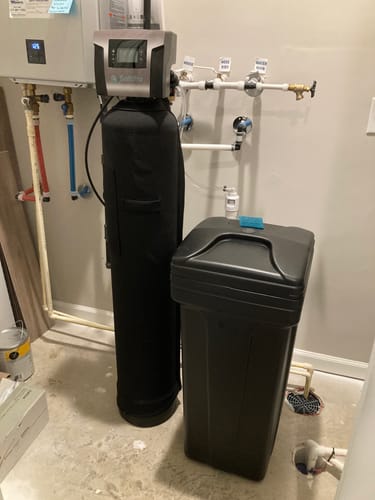
The SoftPro ECO arrived via freight delivery in professional packaging that immediately conveyed quality. The main softener tank stood 54 inches tall—larger than I'd visualized from online photos—but the 10-inch diameter fit comfortably in my designated utility room space.
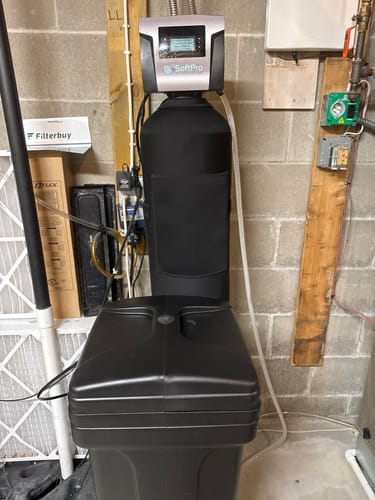
Build quality impressed me from the start. The fiberglass tank felt solid and well-constructed, with a smooth finish that looked more premium than the plastic alternatives I'd considered. The SoftPro Valve assembly appeared robust, with clear digital display and intuitive button layout.
All components arrived undamaged and complete: the main softener tank, separate brine tank, bypass valve assembly, installation fittings, and comprehensive documentation. The instruction manual was refreshingly clear, with detailed diagrams and step-by-step procedures that actually made sense.
I appreciated the inclusion of professional-grade fittings rather than basic hardware store components. The bypass valve mechanism felt substantial, with smooth operation and solid construction that suggested long-term reliability.
One minor surprise was the brine tank's size—22 inches square and 36 inches tall. While not enormous, it required more floor space than anticipated. I'd measured the softener tank carefully but underestimated the total footprint including both components and access space for salt loading.
Installation Experience and Setup Challenges

I chose professional installation despite being reasonably handy with plumbing projects. The complexity of integrating a water softener into existing plumbing, plus local code requirements, made professional installation worth the investment.
My installer arrived with all necessary tools and materials, including copper fittings sized for my 3/4-inch main water line. The installation required cutting into the main line after the pressure tank but before the water heater—a critical placement for protecting downstream appliances while maintaining unsoftened water access for outdoor spigots.
The most challenging aspect involved routing the drain line for regeneration discharge. My utility room layout required running 25 feet of drain line to reach an appropriate floor drain, which added complexity and cost I hadn't fully anticipated.
Electrical requirements were minimal—just a standard 110V outlet for the SoftPro Valve control system. The installer positioned the unit to allow easy access for salt loading while maintaining adequate clearance around the bypass valve for future service.
Initial system programming took about 20 minutes. The SoftPro Valve's interface allows customization of hardness level, regeneration timing, and efficiency settings. We set the system for 12 grains hardness and programmed regeneration for 2:00 AM to minimize disruption during peak usage hours.
The first regeneration cycle began immediately after setup, lasting approximately 90 minutes. I was surprised by how quiet the process operated—just subtle water flow sounds, much quieter than my old washing machine. Total installation time was four hours, including system startup and initial testing.
Performance Analysis: Real-World Results After 8 Months
The transformation in water quality became apparent within 48 hours of installation. Those persistent white spots on glassware disappeared completely, and my coffee maker's performance improved noticeably—better taste and no mineral buildup after months of operation.
I tested water hardness before and after installation using both test strips and a digital TDS meter. Pre-softener readings consistently showed 12-13 grains per gallon hardness, while post-softener water tested at less than 1 grain—effectively achieving complete hardness removal as designed.
The efficiency of the SoftPro system exceeded my expectations in several ways.
Regeneration frequency stabilized at every 8-10 days with our family's usage patterns, consuming approximately 40 pounds of salt monthly. This aligned closely with the manufacturer's efficiency calculations and represented significant improvement over older softener technologies.
Chlorine removal became an unexpected benefit. While primarily designed for hardness removal, the resin bed also reduces chlorine content noticeably. Our tap water now tastes cleaner and lacks the subtle chemical odor that previously required filtration for drinking.
Water pressure remained excellent throughout the system. I measured 52 PSI at fixtures both before and after installation, with no perceptible flow reduction even during peak usage periods. The high-flow design maintains performance without creating pressure drops that plague some competitors.
Soap and detergent efficiency improved dramatically. I reduced laundry detergent usage by approximately 30% while achieving better cleaning results. Dishes emerge spot-free from the dishwasher, and soap lathers more effectively throughout the house.

Personal benefits became evident within weeks. My wife's hair feels softer and more manageable, while the dry, tight skin sensation after showers disappeared completely. These improvements, while secondary to appliance protection, significantly enhanced our daily comfort.
Operating Costs and Long-Term Efficiency
Eight months of operation provides realistic data on actual ownership costs. Salt consumption averages 40-45 pounds monthly, costing approximately $8-10 depending on salt type and local pricing. I use solar salt crystals for optimal purity and system longevity.
Electricity consumption is minimal—the SoftPro Valve's electronic controls add roughly $2-3 monthly to utility bills. Water usage during regeneration cycles totals about 25 gallons per cycle, adding perhaps $1-2 monthly depending on local water rates.
Total monthly operating costs average $12-15, which seems reasonable considering the benefits delivered.
This represents excellent value compared to purchasing bottled water or dealing with ongoing appliance maintenance issues.
I've tracked household savings since installation. Reduced soap and detergent usage saves approximately $15-20 monthly. My coffee maker hasn't required descaling once since installation—previously a monthly $8 expense. The dishwasher performs better without rinse aid additives, saving another $5-8 monthly.
Energy efficiency improvements are harder to quantify precisely, but my water heater operates more efficiently without mineral buildup on heating elements. Conservative estimates suggest 10-15% energy savings for water heating, worth $20-30 monthly during winter months.
Appliance protection represents the largest long-term value. Preventing mineral buildup extends appliance lifespan and maintains peak efficiency. While difficult to calculate precisely, this protection likely saves hundreds annually in premature replacement costs and repair expenses.
Maintenance Requirements and Ongoing Care
Monthly maintenance involves checking salt levels and adding 40-80 pounds as needed. The brine tank's wide opening makes salt loading straightforward, though I recommend purchasing salt in manageable 40-pound bags rather than struggling with 80-pound versions.
I monitor the salt bridge formation monthly—a common issue where salt forms a hard crust above the water level, preventing proper brine formation. This hasn't occurred yet, likely due to using high-quality solar salt and maintaining proper tank levels.
The SoftPro Valve's diagnostic features provide helpful monitoring capabilities.
The display shows days since last regeneration, total gallons processed, and current operating status. Error codes appear if problems develop, though I haven't encountered any issues during eight months of operation.
I clean the brine tank annually, removing accumulated sediment and checking the salt level sensor. This process takes about 30 minutes and ensures optimal long-term performance. The tank design makes cleaning straightforward with good access to all components.
Resin bed cleaning isn't required regularly, but I plan to use resin cleaner annually to remove iron buildup and maintain efficiency. While our city water contains minimal iron, periodic cleaning prevents gradual performance degradation.
The bypass valve gets exercised monthly to ensure smooth operation during any future service needs. This simple maintenance prevents valve sticking and ensures I can isolate the system if necessary without disrupting household water supply.
Final Assessment: Value and Recommendation
After eight months of daily use, the SoftPro ECO water softener has exceeded my expectations in most areas. The complete elimination of hard water problems, combined with efficient operation and reasonable maintenance requirements, delivers excellent value for the investment.

The system's strongest attributes include reliable performance, intuitive controls, and genuine efficiency improvements over older softener technologies. Build quality appears excellent, with no issues or concerns developing during extended operation.
Minor limitations include the substantial physical footprint and ongoing salt purchases. The system requires adequate utility room space and regular attention to maintain optimal performance. These aren't significant drawbacks, but potential buyers should plan accordingly.
Cost-effectiveness becomes clear when considering total ownership benefits. While the initial investment requires careful budgeting, the combination of operational savings, appliance protection, and quality-of-life improvements justifies the expense for households dealing with hard water issues.
I would confidently recommend the SoftPro ECO to homeowners facing similar hard water challenges. The system delivers on its promises with reliable, efficient operation that transforms water quality throughout the house. For families dealing with mineral buildup, soap inefficiency, or appliance protection concerns, this represents an excellent long-term solution.
The peace of mind knowing my water heater, dishwasher, and other appliances are protected from mineral damage makes this investment worthwhile. Combined with the daily improvements in water quality and household comfort, the SoftPro ECO earns my strong recommendation for addressing hard water problems effectively.