
Hi, I'm He Long from Ohio. Craig "The Water Guy" Phillips asked me to share my real-world experience as a homeowner with the SoftPro ECO™ City Water Softener - Best Water Softener Systems for City Water that I purchased several months ago. This is my honest account of how everything unfolded. I hope my journey helps guide your decision-making process.
The Hard Water Problem That Changed Everything
Did you know that over 85% of American homes deal with hard water issues?
I certainly didn't realize how much it was affecting my daily life until I started paying attention. Living in Ohio, I thought the white spots on my glassware and the film on my shower doors were just normal parts of homeownership.
The wake-up call came when my coffee maker stopped working after just 18 months. The repair technician took one look inside and shook his head. "Mineral buildup," he said, pointing to the calcium deposits that had essentially destroyed the heating element. That $300 replacement cost got me thinking about what hard water was doing to the rest of my appliances.
My skin felt constantly dry and itchy, especially during winter months. My wife complained that her hair felt "crunchy" no matter what expensive shampoos she tried. Our water heater seemed to work harder and longer to get the same results, and I noticed our utility bills creeping upward month after month.
The breaking point came during a dinner party when a guest asked if our glasses were clean. The embarrassment was real – despite running them through the dishwasher twice, they still had those telltale white spots and film. I tested our water the next day and discovered we had 18 grains per gallon of hardness. According to everything I read, anything over 7 grains is considered "very hard."
Research Phase: Learning What I Actually Needed
I spent three weeks researching water softening solutions, and honestly, the amount of conflicting information was overwhelming. Some sources recommended salt-free systems, others insisted only traditional ion exchange worked effectively. Price ranges varied wildly, from $400 big-box store units to $3,000 premium systems.
The key breakthrough came when I learned to focus on capacity calculations rather than marketing claims. With our family of four and 18 GPG hardness, I calculated we needed approximately 64,000 grains of capacity for efficient operation. This meant looking at systems rated for 48,000-80,000 grains to avoid constant regeneration cycles.
I also discovered the importance of high-efficiency features. Traditional softeners waste significant amounts of water and salt during regeneration. Given Ohio's increasing water costs and my environmental concerns, efficiency became a primary decision factor.
Certification mattered more than I initially realized. NSF/ANSI Standard 44 certification ensures the system actually performs as advertised. Many cheaper units lack proper testing, which explained the mixed reviews I was reading online.
After comparing technologies, I eliminated salt-free "conditioners" because they don't actually remove hardness minerals – they claim to change their structure, but the science seemed questionable for our severe hardness level.
Why I Chose the SoftPro ECO System
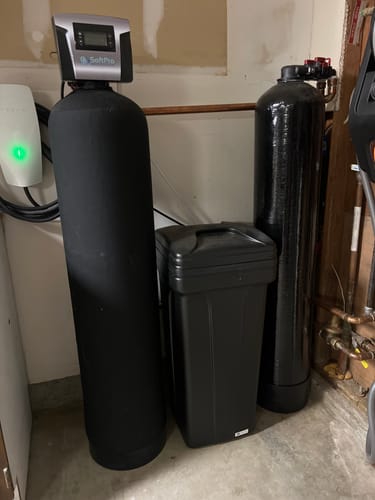
Several factors made the SoftPro ECO stand out during my research. The upflow regeneration design caught my attention because it uses the existing resin bed as a filter, requiring less water and salt than traditional downflow systems. For our usage pattern, this translated to approximately 40% less salt consumption and 60% less waste water.
The digital Vortech control head offered programming flexibility I didn't find in basic systems. Instead of simple timer-based regeneration, it monitors actual water usage and initiates cleaning cycles based on calculated capacity depletion. This smart approach meant no wasted regeneration cycles during vacations or low-usage periods.
Build quality impressed me during the showroom visit. The mineral tank uses high-grade fiberglass construction with a 10-year warranty, while the resin bed carries a 15-year guarantee. The brine tank design includes a safety overflow and salt grid system that prevents bridging issues common in cheaper units.
NSF certification provided confidence in performance claims. The system is tested and certified to remove hardness down to 1 grain per gallon or less, which would solve our 18 GPG problem completely.
Local dealer support was crucial since I planned DIY installation but wanted backup assistance if needed. SoftPro's dealer network in Ohio offered technical support and parts availability that big-box alternatives couldn't match.
Installation Experience and Initial Setup

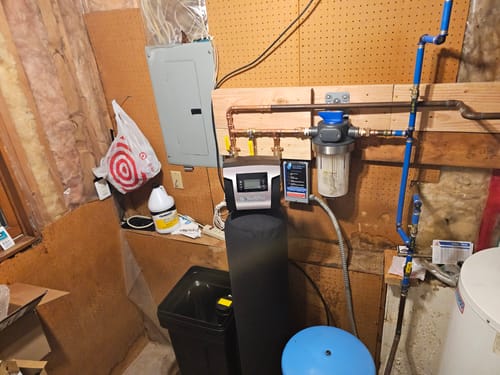
Installation took longer than expected – about 6 hours total over a weekend. The instructions were comprehensive, but working in my basement's tight quarters created challenges I hadn't anticipated. Having a helper for the heavy lifting proved essential; the mineral tank weighs approximately 150 pounds when loaded with resin.
Pre-installation preparation required more planning than I realized. I needed to install a bypass valve system, run a drain line to my utility sink, and ensure proper electrical supply for the control head. The drain line couldn't exceed 20 feet in length, which influenced my placement options.
Connecting to my existing 1-inch copper plumbing required compression fittings and careful measurement. The system's inlet and outlet ports are clearly marked, but I double-checked everything before making final connections. Water pressure testing revealed no leaks, which was a relief.
Programming the Vortech control head was surprisingly intuitive. I entered our water hardness (18 GPG), iron content (0.2 PPM), and household size (4 people). The system calculated optimal regeneration timing and salt dosage automatically. Initial settings showed regeneration every 8-10 days based on our usage patterns.
The first regeneration cycle took about 90 minutes and used approximately 12 pounds of salt. I watched the entire process to understand the timing and ensure everything operated correctly. The system was whisper-quiet except during the brief backwash phase.
Real-World Performance and Daily Impact
The difference became apparent within 48 hours. Our first load of dishes came out spotless – no white film, no water spots on glasses. My wife noticed softer skin immediately, and her hair felt noticeably different after the first shower.
I tested the softened water at multiple taps throughout the house. Hardness levels dropped from 18 GPG to less than 1 GPG consistently. The kitchen faucet, master bathroom shower, and laundry room all showed identical results, confirming the system was treating our entire water supply effectively.
Coffee taste improved dramatically. Without mineral interference, our morning brew actually tasted like the premium beans we were buying. The coffee maker's performance indicators showed normal operation instead of the scaling warnings we'd grown accustomed to.
Soap and shampoo effectiveness increased significantly. We're using about half the amount of laundry detergent and body wash to achieve better results. Clothes feel softer and colors appear brighter without the mineral dulling effect.
Hot water recovery time improved noticeably. Our water heater reaches target temperature faster and maintains it more efficiently. I estimate we're saving 10-15% on heating costs based on utility bill comparisons.
What surprised me most was the impact on cleaning time.
Bathroom fixtures stay cleaner longer without hard water stains. Weekly cleaning became monthly touch-ups for most surfaces.
Operating Costs and Efficiency Analysis
Salt consumption averages 40-50 pounds monthly for our family of four. At current local prices ($6 per 40-pound bag), monthly salt costs run approximately $7-8. This is significantly less than the 80-100 pounds traditional systems would consume for equivalent softening.
Water usage during regeneration cycles measures approximately 25 gallons per cycle. With regeneration every 8-10 days, monthly water costs add roughly $3-4 to our utility bill. The efficiency gained from improved water heater performance more than offsets this additional usage.

Electricity Browse around this site consumption is minimal since the Vortech control head only draws power during programming and regeneration cycles. I estimate less than $2 monthly in electrical costs.
Total operating expenses run approximately $12-15 monthly, which is reasonable considering the benefits. Comparing this to potential appliance damage costs and increased cleaning product usage, the system pays for itself through protection and efficiency gains.
The real savings come from appliance longevity. Our dishwasher, washing machine, and water heater should last significantly longer without constant mineral exposure. Repair technicians estimate 30-50% longer appliance life with properly softened water.
Maintenance Requirements and Long-Term Ownership
Monthly maintenance involves checking salt levels and adding 40-pound bags as needed. The brine tank design makes this straightforward – I can see the salt level through the tank and add bags without tools. The salt grid system prevents bridging, so I haven't experienced the clumping issues common with other systems.
Every three months, I clean the brine tank's venturi valve and check the bypass valve operation. This 15-minute process ensures optimal performance and prevents mineral buildup in critical components. The control head displays service reminders, so I never forget scheduled maintenance.
Annual maintenance includes resin bed sanitization using iron-out solution. This process removes any accumulated iron or organic matter that could affect performance. The procedure is detailed in the manual and takes about 30 minutes of active time.
After 8 months of operation, performance remains consistent with installation day. Water hardness tests show the same sub-1 GPG results, and regeneration frequency hasn't changed. The resin bed appears to be maintaining its capacity effectively.
Component quality has held up well under daily use. The digital display remains bright and responsive, all connections stay leak-free, and the regeneration cycle timing hasn't drifted from original settings.
Final Assessment and Recommendation
The SoftPro ECO has exceeded my expectations in both performance and efficiency. Our severe hard water problem is completely solved, with measurable improvements in water quality, appliance performance, and daily comfort. The 18 GPG hardness that was damaging our appliances and affecting our lifestyle is now consistently below 1 GPG throughout our home.
Installation complexity was manageable for someone comfortable with basic plumbing, though professional installation might be worth considering if you lack experience with water system connections. The time investment was significant but reasonable given the long-term benefits.
Operating costs are lower than expected, and the efficiency features deliver real savings compared to traditional softening systems. Monthly expenses of $12-15 seem reasonable when weighed against appliance protection and improved water quality.
This system is ideal for homeowners with moderate to severe hardness issues who want efficient, reliable softening without constant maintenance. The smart regeneration technology and high-quality components justify the investment for long-term performance.
Would I purchase this system again?
Absolutely. The combination of effective performance, efficient operation, and reliable build quality makes it an excellent value for serious hard water problems. After 8 months of ownership, I'm confident this was the right choice for our situation.