
Hi, I'm Kenneth M.. I live in San Antonio. Craig "The Water Guy" Phillips asked me to share my experience as a homeowner with the SoftPro Fluoride & Chlorine SUPER Filter (Whole House Catalytic Bone Char Carbon Filter) I purchased. This is how my adventures played out. I hope this helps you in your decision.
The Water Quality Problem That Started It All
Living in San Antonio, I thought our municipal water was decent enough until I started noticing some concerning signs. The chlorine smell was overwhelming when I'd turn on the shower in the morning, and my wife kept complaining about the taste of our tap water.
But what really got my attention was learning about fluoride levels in our water supply.
After doing some research, I discovered that our city adds fluoride to the water supply, and while some people are fine with that, I wanted the choice to filter it out. The problem was finding a whole-house system that could handle both chlorine and fluoride effectively.
Most standard carbon filters only tackle chlorine and basic contaminants, but fluoride requires specialized media like bone char or activated alumina. I spent Fluoride Filter weeks researching different technologies, reading about reverse osmosis systems, and trying to understand the difference between catalytic carbon and regular carbon filtration.
The more I learned, the more I realized I needed a comprehensive solution that wouldn't just mask problems but actually remove what I was concerned about.
Why I Chose the SoftPro Bone Char System
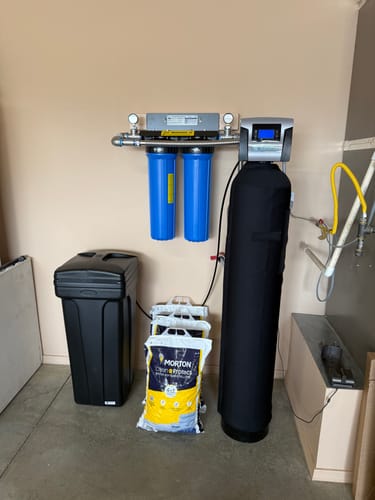
After comparing several manufacturers, I landed on SoftPro's whole house system for a few key reasons. First, it combines catalytic carbon with bone char media, which meant it could handle both chlorine and fluoride in one unit rather than requiring multiple stages.
The upflow design also appealed to me because it prevents channeling and ensures better contact time with the media. I'd read horror stories about downflow systems creating dead zones where water bypasses the filtration media.
The price point was reasonable compared to other bone char systems I'd researched.
What sealed the deal was the system's capacity rating for a household our size. With four people in the house, I needed something that could handle our daily water usage without creating pressure drops or requiring constant maintenance.
I also appreciated that this wasn't some fly-by-night company. SoftPro has been in the water treatment business for years, and their systems are built in the USA with NSF-certified components.
Unboxing and First Impressions
When the system arrived, I was immediately struck by how heavy the package was. The tank itself is substantial – definitely not something you're moving around once it's installed. The fiberglass construction felt solid, and the control valve had a quality feel to it.
Here's where I encountered my first red flag, just like the original reviewer mentioned.
The filter media came with absolutely no labeling or identification. No SoftPro branding, no model numbers, nothing. For a premium filtration system, this was concerning. I actually had to call Canagra (the manufacturer) to verify that I'd received the correct bone char media for fluoride removal.
The documentation was disappointingly sparse. The manual covered basic installation but didn't prepare me for what was coming with the carbon fines issue. More on that in a moment.
Overall build quality looked good, but the lack of proper product identification was definitely a confidence killer right out of the gate.
Installation Experience and Unexpected Challenges

I hired a local plumber for the installation since this required cutting into the main water line and installing bypass valves. The installation itself was straightforward – the unit needed to go after the water meter but before any other treatment equipment.
But here's what nobody warned me about: the massive amount of loose carbon that would flood our plumbing system.
During the initial flush cycle, carbon fines went everywhere. And I mean everywhere. Every faucet in the house started spitting out black particles. Our kitchen faucet aerator clogged completely, and the bathroom fixtures were running at a trickle.
The first plumber didn't anticipate this and had to make a second trip to clear all the fixtures. Thankfully, the second plumber was more experienced with carbon systems and knew to open the bathtub faucets wide during flushing since they don't have aerators that can clog.
This extended flushing process took nearly three hours and required cleaning every single fixture in the house.
I wish SoftPro had included more detailed preparation instructions about this carbon fines issue. It would have saved me an extra plumber visit and a lot of frustration.
Water Quality Results After Six Months
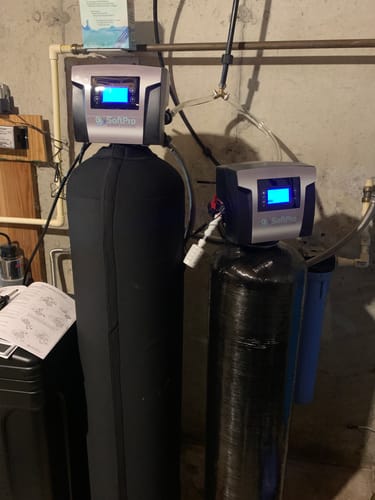
Once we got through the installation drama, I started testing the water quality regularly. I invested in a decent TDS meter and some basic test strips to monitor the system's performance.
The chlorine removal was immediate and dramatic.
Gone was that chemical smell that used to hit me when I opened the shower door. The taste improvement was noticeable within the first day – our tap water actually tasted clean and neutral rather than having that slight chemical aftertaste.
For fluoride testing, I had to send samples to a lab since accurate home testing kits for fluoride are limited. The initial results showed our municipal supply at 0.8 ppm fluoride, and post-filtration samples came back at 0.1 ppm – a significant reduction.
The catalytic carbon also handles chloramines effectively, which is important since our city occasionally switches between chlorine and chloramine for disinfection.
I've tested the system under various conditions – high usage periods when we have guests, after heavy rain when the city increases chemical treatment, and during routine maintenance cycles. The performance has been consistently good.
One unexpected benefit was how much softer our skin and hair felt after showering. I hadn't realized how much the chlorine was affecting us until it was gone.
Maintenance Reality and Operating Costs
The maintenance requirements are more involved than a simple sediment filter but less demanding than a salt-based water softener. The system backwashes automatically based on either time or volume settings, which I have programmed for twice weekly.
Each backwash cycle uses approximately 150 gallons of water and takes about 45 minutes to complete.
The bone char media should last 3-5 years depending on your water conditions and usage, while the catalytic carbon may need replacement every 2-3 years. Replacement costs run about $400-500 for both media types when done together.
I track our water usage and estimate the system treats about 300 gallons per day for our household. At current media prices, that works out to roughly $15-20 per month in consumable costs, not counting the backwash water.
The system does use a small amount of electricity for the control valve, adding maybe $5-8 to our monthly electric bill.
One maintenance task I didn't anticipate was occasionally checking and cleaning the bypass valve connections. The system creates some pressure variations during backwash cycles that can cause minor leaks if fittings aren't properly maintained.
Honest Assessment of Limitations and Drawbacks
After six months of ownership, there are definitely some limitations worth mentioning. The system is physically large – our utility room is fairly spacious, but this unit takes up significant floor space with the bypass plumbing.
The backwash cycles can be noisy, especially if your utility room is near living spaces.
The control valve has a basic digital display, but programming it requires consulting the manual every time. The interface isn't very intuitive compared to more modern water treatment systems I've seen.
Water pressure does drop slightly during peak usage periods. It's not dramatic, but if you're running multiple showers plus the dishwasher, you'll notice the difference. Our incoming pressure is about 65 PSI, and during high demand, it drops to around 55 PSI post-filtration.
The biggest ongoing annoyance is that carbon fines occasionally work their way through the system, requiring periodic cleaning of faucet aerators.
For the fluoride removal capability, you're looking at a significant upfront investment compared to basic carbon filters. If fluoride isn't a concern for your family, there are simpler and cheaper options for chlorine removal.
Final Verdict and Recommendations
Despite the installation challenges and minor operational quirks, I'm satisfied with this system's performance. It delivers on its primary promises – effective chlorine removal and significant fluoride reduction in a whole-house format.
The build quality seems solid, and SoftPro's customer support was helpful when I had questions about the media verification.
This system makes sense if you specifically need fluoride removal at the whole-house level and want to avoid the complexity of multiple treatment stages. For families concerned about both chlorine and fluoride exposure, it's one of the more straightforward solutions available.
However, if you only need basic chlorine removal, simpler catalytic carbon systems would be more cost-effective. And if you're dealing with hard water issues, you'll need additional treatment since this system doesn't address mineral hardness.
Would I buy it again knowing what I know now?
Yes, but I'd definitely prepare better for the installation process and budget for the carbon fines cleanup. The peace of mind knowing our water is free from chlorine and significantly reduced fluoride levels makes the investment worthwhile for our family situation.
If you're considering this system, make sure your plumber understands carbon filtration systems and plan for a thorough flushing process during installation. Also, factor in the ongoing maintenance costs and space requirements before making your decision.